My Inventions
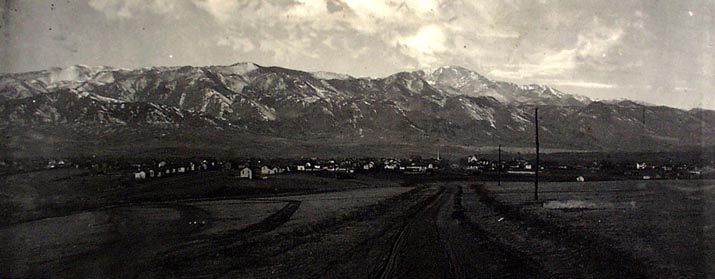
Nikola Tesla’s journey to Colorado Springs, CO, 1899.
01 The Pullman Car
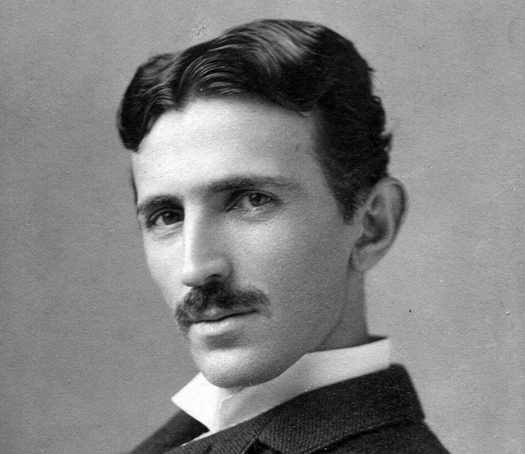
NEW YORK CITY, MAY 11, 1899. Leaving behind the suffocating geometry of Manhattan and the bitter, soot-choked memory of his South Fifth Avenue laboratory — which had burned to ash some years prior, taking with it the mechanical artifacts of his youth, like a library of Babel reduced to a single cinder — Nikola Tesla, 42, boarded the afternoon train bound for the high plains of the American West. He sought not merely a laboratory, but a sanctuary of absolute isolation: a labyrinth of thin air and altitude where the atmosphere, stripped of moisture, might become a transparent medium for those great, unseen currents that span the globe.
The journey across the continent was marked by that monotonous, rhythmic clatter of iron wheels which invariably induces a state of somnolent melancholia in the traveler, a reminder that time is perhaps nothing more than a series of identical, repeating intervals. Booking a private Pullman sleeper compartment, Tesla undertook a multi-day itinerary that required changing trains in Chicago, as no direct route then existed to carry a man seamlessly from the Atlantic littoral to the Rocky Mountains.
As the frantic, ephemeral tableau of the city stations gave way to the increasingly desolate expanses of the interior, Tesla looked out through the soot-streaked glass at a landscape that seemed to have been entirely emptied of human history. Here, in this vast and featureless topography, the eye found nothing to rest upon but the straight line of the horizon — an oppressive, flat expanse so absolute that it appeared less like a geographical feature and more like a flaw in the fabric of creation itself.
The day had been consumed by the grueling, minutiae-laden preparations for this self-imposed exile, but now, confined to the narrow dimensions of his first-class compartment — structurally too short to comfortably accommodate his six-foot-two frame — the relentless, mechanical thrumming of the locomotive became a laboratory of minor torments, rendering rest impossible.
To pass the hours of this waking dream, Tesla re-read that curious essay dedicated to his inventions, bearing the somewhat grandiloquent title, “The New Wizard of the West,” which appeared in that month’s edition of Pearson’s Magazine. The author of this chronicle, a certain Chauncey Montgomery M’Govern — a man whose mind was clearly captive to the illusions of linear progress — wrote with an enthusiasm that bordered on the reverent, describing at length the inventor’s experimental ambitions in the remote, high-altitude landscapes of Colorado.
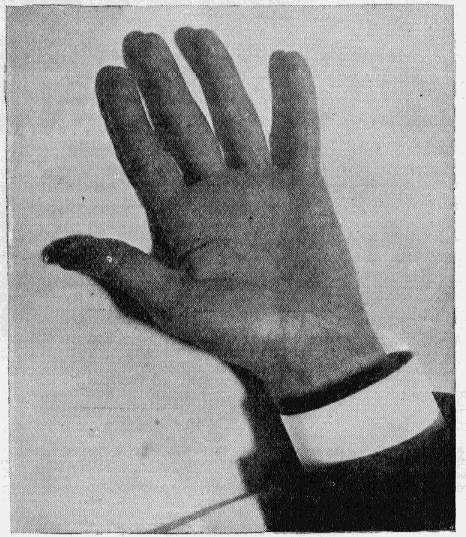
Accompanying the text was a singular, somewhat grainy photograph, depicting Tesla’s own hand held aloft and illuminated by what was described as a form of “artificial daylight” — the product of a newly fashioned wireless lightbulb. It was M’Govern’s firm conviction, recorded with that peculiar late-nineteenth-century faith in the inevitable triumph of science, that Tesla had finally realized his lifelong dream of producing a light indistinguishable from the sun, forgetting that every light cast by man merely deepens the surrounding shadows.
It was precisely this same conviction that compelled John Jacob Astor IV to transfer the sum of $100,000 into the ledger of the fledgling Nikola Tesla Company. Astor held a quiet, almost mercantile faith in the utility of his immense wealth. He intended to direct it toward something tangible: the meticulous work of refining, patenting, and eventually manufacturing a domestic electric light—a cool, fluorescent glow designed to lift the heavy shadows from the parlors of the Eastern Seaboard.
Yet, as was so often the case with Tesla, the material currency of men was swiftly transmuted into something ethereal and remote, like gold changing into smoke in an alchemist’s crucible. Rather than commissioning the brick and mortar of a manufacturing foundry, Tesla gathered the capital like migratory dust and vanished toward the high, thin air of Colorado Springs, preferring to trade in the invisible, galloping currents of wireless power meant to encircle the entire globe.
With a slow, almost ritualistic deliberation, Tesla reached into the breast pocket of his immaculate dark suit and withdrew a small, heavy object wrapped in a silk handkerchief. It was a jagged fragment of mirror glass, its silver backing partially scorched and peeling — the sole survivor of the catastrophic fire that had reduced his South Fifth Avenue laboratory to ash.
To any ordinary traveler, the glass would have reflected the claustrophobic mahogany paneling of the Pullman compartment or the gaunt, sleepless lines of the inventor’s own face. But this mirror had lost its fidelity to the present; it had become an anchor in a frozen sea of time. Within its silvered depths, it remained eternally fixed at precisely four o’clock in the morning on the night before the fire.
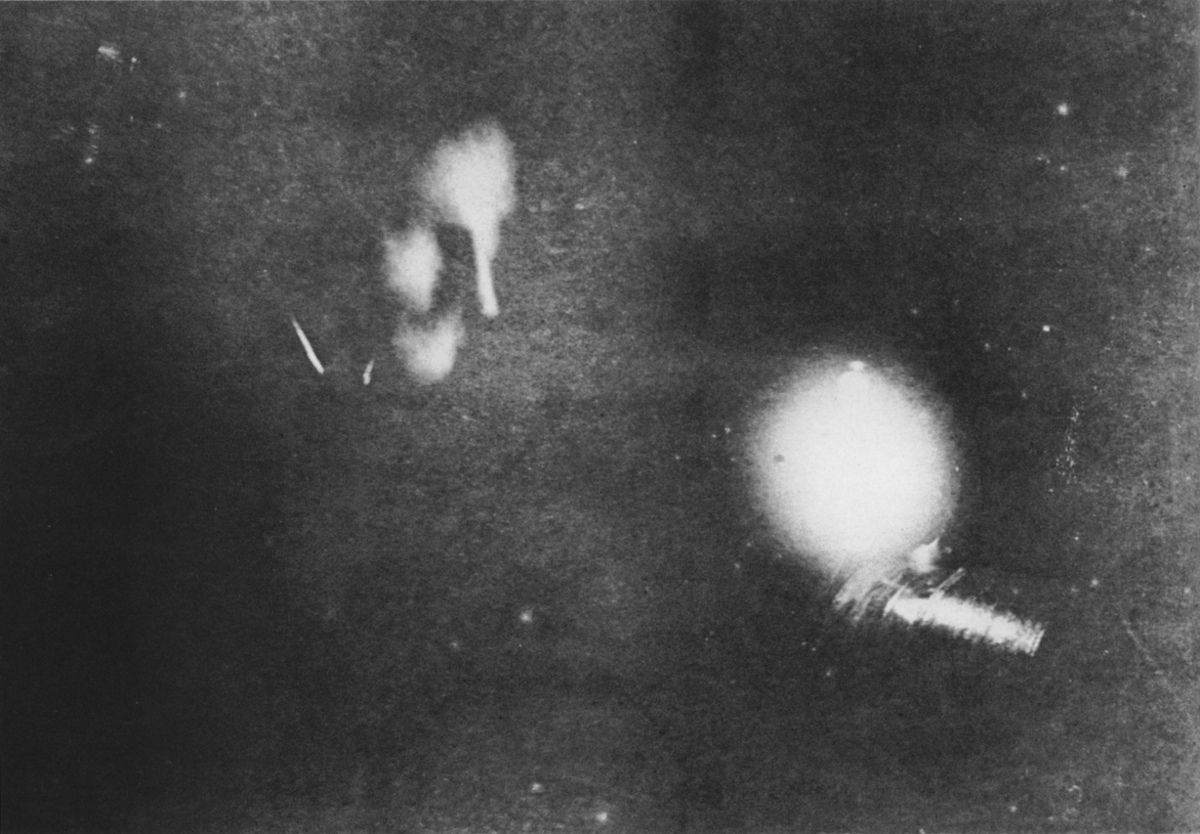
Tesla looked into the glass. There, illuminated by the pale, cold glow of his early high-frequency coils, was the laboratory of his youth. The heavy iron dynamos, the neatly cataloged glass vacuum tubes, and the sprawling networks of copper wire stood in immaculate, unburned order. If he held the fragment at a certain angle, he could even see the narrow back of his own silhouette, hunched over a workbench, drafting a diagram for the transmission of world power.
But as the locomotive plunged deeper into the featureless void of the Western plains, Tesla noticed a terrifying mutation. The past within the glass was no longer static. The phantom version of himself in the mirror was moving independently of his memories. The reflected Tesla paused, laid down his pen, and slowly turned around to look out of the glass — gazing directly across the chasm of time at the older, exiled Tesla sitting in the speeding train.
In that mirrored gaze, Tesla realized the true horror of his condition: the fire had not destroyed his past; it had merely trapped it in an alternate, parallel eternity. The man on the train and the man in the mirror remained locked in a silent, nocturnal duel, each wondering which of them was the living inventor, and which was merely the soot-stained ghost of a dream.
As the sun descended over the horizon, Tesla’s piercing light blue-gray eyes remained wide in the dark, contemplating the infinity of the night. To those few passersby who had seen him cross the platform in Manhattan, his immaculate dark suit had seemed an armor against the encroaching chaos of the world; yet here, confined within the wooden paneling of the Pullman car, his meticulous grooming felt like a frail defense against the dust and the heavy, unventilated air of the carriage.
Gazing out into the pale, moonlit monochrome of the passing plains, he became aware of a figure floating effortlessly above the desolate landscape. It was an allegory made flesh: a woman of angelic proportions, clad in flowing drapery, who seemed to be skimming the horizon, stringing endless miles of telegraph wire across the face of the expanding continent. Wherever she passed, the wilderness was instantly transformed; railroads snaked across the earth like iron serpents, and brick cities sprouted from the soil like fungi. In her shadow, the indigenous peoples and great, dark herds of buffalo fled in terror from a light they could neither understand nor survive — sacrifices on the altar of a future that would soon forget them.
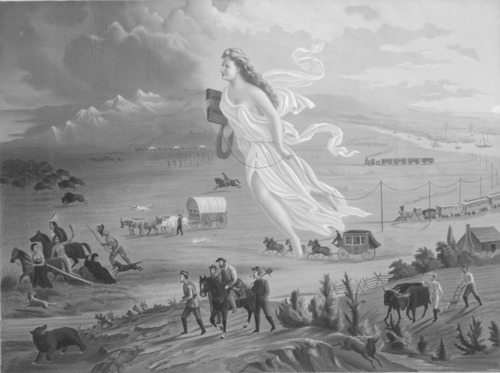
Even when Tesla closed his eyes, this voluptuous phantom of progress remained imprinted on the back of his eyelids, sailing ever forward just ahead of the engine, weaving her silver web across an infinite cemetery of felled trees whose stumps rushed past the train like a sequence of rhythmic, indelible shadows.
02 Chicago
On the afternoon of the thirteenth of May, the locomotive decelerated with a series of heavy, metallic sighs into the vast, iron-ribbed cavern of the Chicago station. Emerging from the narrow confines of his Pullman carriage, Tesla was greeted by a delegation from the Commercial Club. They were grave, thick-set men of commerce, whose physical solidity suggested they were built of the very stone and steel from which they drew their fortunes. They had enticed the inventor to interrupt his westward migration for a singular purpose: to demonstrate that small, wireless automaton which he had debuted to much acclaim at Madison Square Garden the previous autumn. It was a machine that seemed to possess a fragile, mechanical soul of its own.
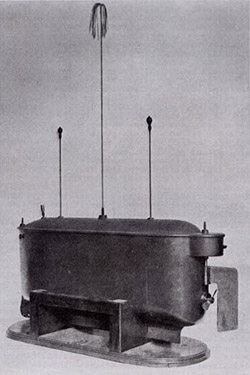
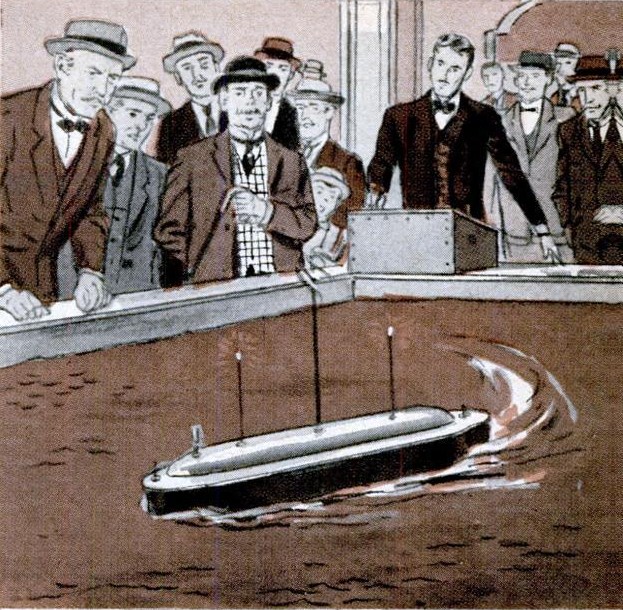
“Nikola Tesla touched a lever in the banquet hall of the Auditorium and the members of the Commercial club witnessed the strange sight of a miniature torpedo boat twenty feet from the seat of power show every sign of life,” reported The Niagara Falls Gazette.
“The propeller whizzed around, the rudder moved, and the boat was lighted throughout by electricity. To climax all, a shot was heard, the bow of the little wooden model poured forth flame and smoke, and all the effect and dramatic action of a torpedo leaving its place was observed by the onlookers.”
A less passionate contemporary dispatch would later summarize this fleeting interlude with a stark, almost melancholic brevity: “One afternoon of busy work with his machinery, a lecture in the evening, a day of social visits. That was all.”
It was during this evening lecture, “On the Art of Teleautomatics,” that Tesla articulated a vision so vast it caused a peculiar vertigo in those who listened. He spoke of an instrument so hyper-sensitive that it could feel electrical disturbances created anywhere on the terrestrial globe. It was a device through which he proposed, with an unwavering solemnity, to establish communication between the Earth and the planets, bridging the terrible silence of the cosmos.
“The coming century,” he proclaimed, his voice carrying a strangely melodic timbre through the crowded hall, “will be the era of the atmosphere.”
“From the moment I discovered that the air under certain conditions was a better conductor than a brass rod, I saw possibilities which made me grow faint and dizzy at their expanse.”
The following morning, The Chicago Times-Herald published a sweeping feature under the title “Tesla’s Task of Taming Air.” In the columned prose of the interview, Tesla sought to define an entirely “new art” of intelligence transmission, rather than a mere improvement upon existing telegraphy — a concept he viewed not as a tool for men, but as an awakening of the world’s hidden architecture. Without explicitly uttering the name of his young Italian rival, Guglielmo Marconi — who, two months prior, had successfully sent a wireless transmission across the English Channel — Tesla sharply distanced himself from those who pursued immediate financial profit. He asserted instead that he was dedicated solely to chasing foundational principles, moving through the marketplace of practical ideas like an ascetic through a bazaar.
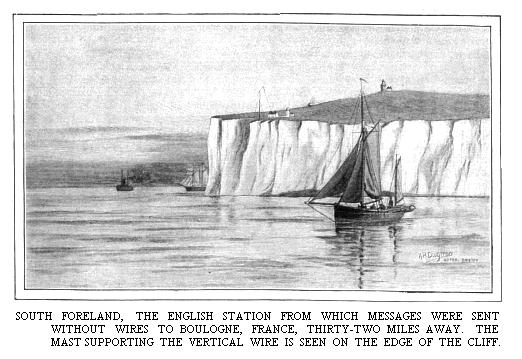
Yet the public imagination, fueled by the sensationalism of the era’s print, seized only upon his most extravagant prognostications. They hungered for his claims that he might soon broadcast wireless power to the furthest corners of the globe, convert atmospheric nitrogen into cheap fertilizer to banish famine, or transmit signals across the cold void to the geometric plains of Mars.
Beneath the veneer of high-society adulation — which included an elegant, flower-strewn luncheon thrown in his honor by the prominent hostess, Mrs. H.H. Kohlsaat, and her husband, Herman, publisher of the Times-Herald — there ran a cold undercurrent of skepticism. In the editorial rooms of the competing Chicago Tribune, writers dipped their pens in ink of a distinctly cynical hue. They openly dismissed his ideas of communicating with the stars or navigating crewless, autonomous battleships across the oceans, treating his equations as if they were mere fables told to soothe a restless age.
To these pragmatic observers of the Gilded Age, the inventor’s grand designs were treated not as science, but as the “cobwebs of Nikola Tesla’s imagination.” They were viewed as beautiful, useless hallucinations akin to the magic of Aladdin’s lamp — holograms of light that would leave no lasting mark upon the heavy, ink-stained ledger books of industry.
03 The Alta Vista Hotel
On the seventeenth day of May, the Union Pacific, Denver & Gulf railroad line carried him at last into Colorado Springs, a place where the earth rose up violently to meet a vast and indifferent sky.
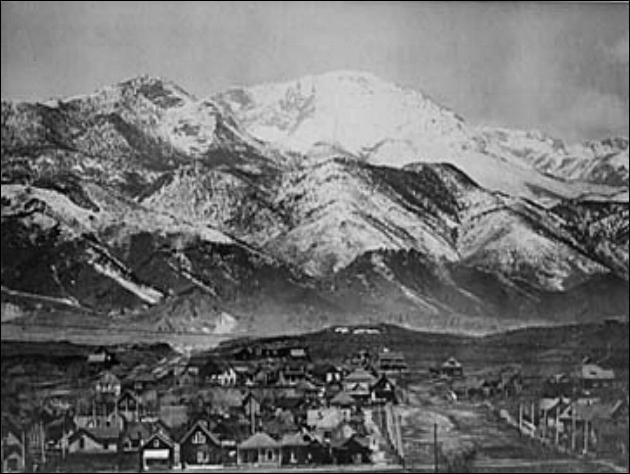
He arrived at noon, stepping off the train to little fanfare, a solitary traveler whose presence went largely unremarked by the few souls lingering on the platform.
Stepping into the thin, crisp air of the Rocky Mountains, the vast expanse of the landscape filled him with a sense of excitement. He became instantly convinced that this high altitude, stripped of moisture and density, was the absolute key to unlocking his grand system of wireless power. The city itself, which presented itself as a curious hybrid of a raw frontier outpost and an upscale resort, seemed entirely oblivious to the vast, unseen currents he intended to summon from its soil.
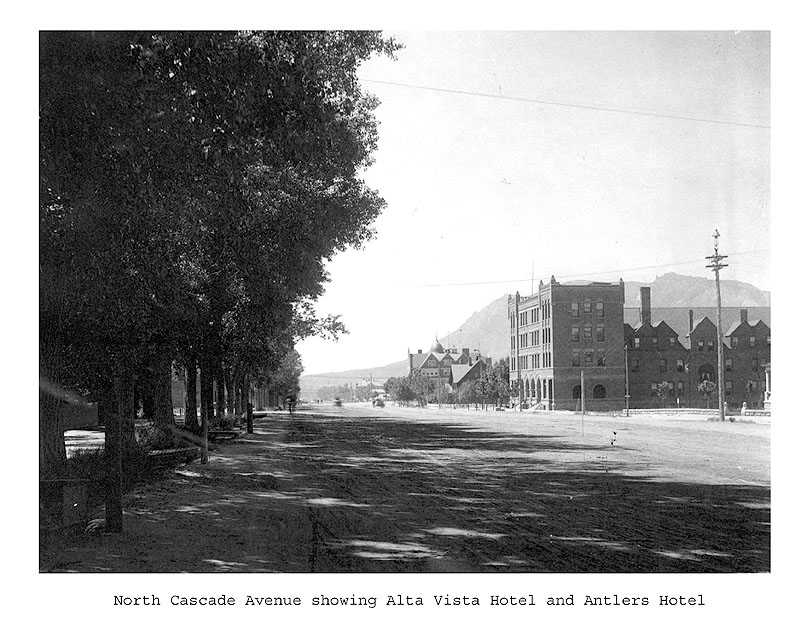
He immediately retreated to the Alta Vista Hotel, just blocks from the local train station, in the foothills of Pikes Peak. He engaged suite 207, a number divisible by three, as per his precise instructions. It was here that he sought to close himself off from the world behind heavy curtains.
Excusals were quietly sent to the local electricians and academics from the college who sought an audience with him, as Tesla remained confined to his quarters for the remainder of the afternoon and evening. Looking out from his hotel window at the dark silhouette of the mountains, he expected to remain in the vicinity for only “some months,” imagining that a single season would suffice. He could not have anticipated that his experiments would expand to consume the remainder of the year, holding him captive through the autumn frosts and into the deep winter snows, carrying him, isolated and deeply changed, to the very dawn of a new century.
04 Knob Hill
The following morning, Tesla was impatient to inspect the plot of land where his future operations would be centered. Accompanied by his friend and patent attorney, Leonard E. Curtis, they surveyed a barren prairie eminence known as Knob Hill, located a few miles east of the downtown district. The site presented a vista of absolute desolation, a vast and silent emptiness which Tesla, with his characteristic sensory acuity, immediately recognized as ideal for the massive, high-voltage experiments he intended to unleash upon the atmosphere.
During this initial period of anticipation, his daily life took on a rigid, almost ritualistic rhythm within the confines of the luxurious Alta Vista Hotel. Afflicted by an agonizing dread of unseen contamination, he compelled the hotel staff to deliver precisely eighteen fresh towels to his door each morning, while he subsisted on a sparse, unchanging regimen of warm milk, eggs, and light soups.
The subsequent days were consumed by the meticulous finalization of resources required to establish what would become known as the Tesla Experimental Station. With the assistance of a local businessman named W.S. Jackson, he officially secured the pasture land on the hill. Simultaneously, Curtis utilized his influence to arrange a crucial dispensation from the El Paso Electric Company, which agreed to provide Tesla with an unrestricted, free supply of electricity from their generating station.
To give physical form to his eccentric visions upon this lonely topography, he engaged the services of Joseph Dozier, a prominent local contractor who was tasked not only with the labor but with supplying the vast quantities of rough-cut lumber needed for the barn-like structure. Dozier suddenly found himself swept up in a vortex of relentless exertion; consumed by the fear that his competitors might outpace him, Tesla forced the men to work at a breakneck pace, entirely indifferent to the aesthetic refinement of the building they were assembling.
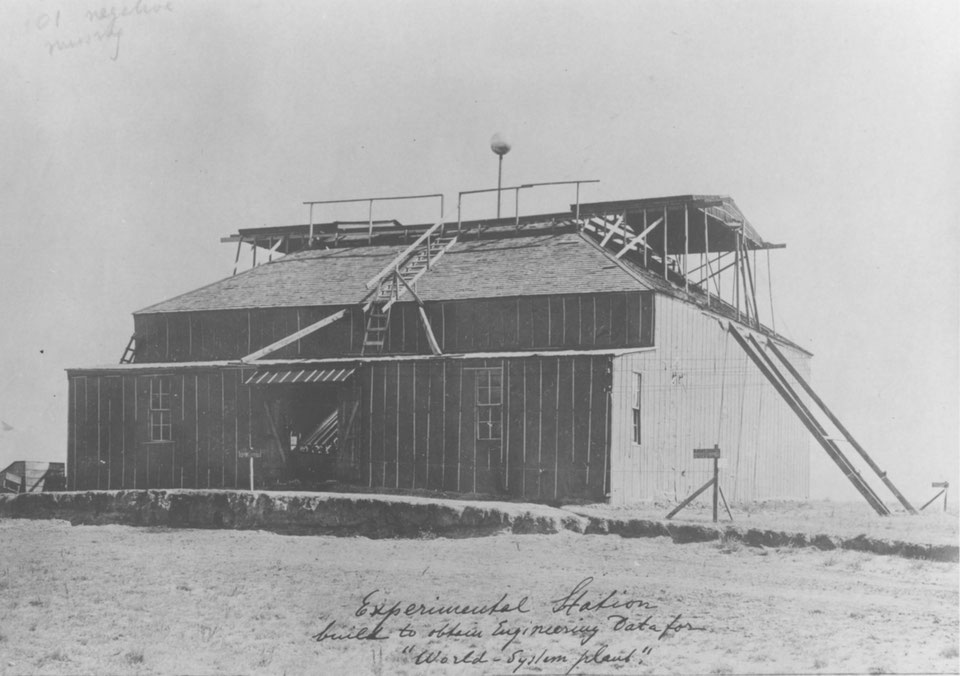
The resulting laboratory, which soon stood isolated on the prairie like a stranded ark, possessed a remarkably rough, almost dilapidated appearance. Historical photographs from that era reveal that the outer scaffolding was never dismantled; it remained permanently affixed to the unpainted walls, a skeletal framework serving the dual purpose of hasty construction and a desperate bracing against the fierce Colorado winds.
The sudden, chaotic intrusion of this architecture on the high ridge did not fail to evoke a deep and silent apprehension among the townspeople of Colorado Springs. To the residents of what was then a quiet, orderly health resort often called “Little London” — populated by wealthy invalids and tourists seeking the pure mountain air — the frantic pace of the construction on Knob Hill appeared like a manifestation of an unwholesome delusion. Local journalists, whom Tesla aggressively shunned upon his arrival, published speculative reports that only deepened the ambient unease.
05 The El Paso Club
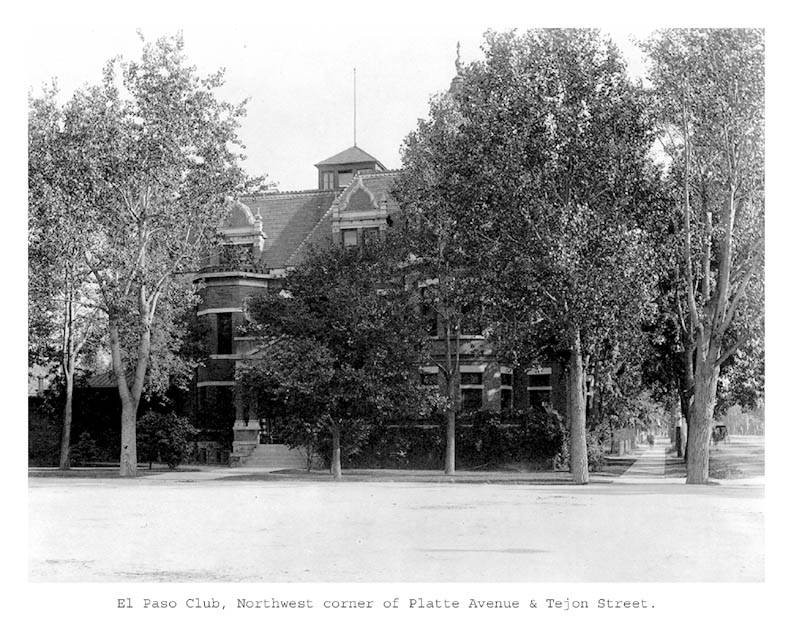
It was on a Tuesday afternoon, less than a week after his arrival in the mountain territory, that Leonard Curtis escorted Tesla to a luncheon which had been arranged in his honor. Little did Tesla realize how strangely peaceful the day appeared to the residents of Colorado Springs, who had only recently endured the Great Blizzard of 1899, which brought an almost apocalyptic stillness to the town, burying the vast plains under drifts of unyielding snow and plunging the cities into unprecedented cold. Yet, on this day in late May, those frozen vistas had entirely dissolved into the mild, almost melancholic predictability of a high-altitude spring. Local botanists and residents alike could be seen wandering the foothills of the Pikes Peak region to witness the first blooming of the white and lavender columbine, which had only recently been named the state flower.
Nevertheless, to the reporters from the Denver Rocky Mountain News who cornered him outside the El Paso Club, Tesla spoke with a cold, severe detachment, eager to correct the sensational rumors that had already appeared in the press.
He flatly denied the widespread report that he intended to attempt the transmission of a wireless message from the summit of Pikes Peak to Paris, or that he meant to experiment between the local mountain peaks. He admitted that his ultimate ambition was indeed to perfect a system capable of signaling across the Atlantic from New York to Paris, but his presence in the mountains was strictly dedicated to foundational research. “I am here for work,” he insisted, “and not for pleasure or my health.”
He disclosed that two of his assistants were already on their way from the East, carrying the delicate instruments required for the tasks ahead. Once they arrived, it was expected he would ascend the historic peak to begin his observations, though local observers noted he would likely not make the ascent until the middle of the following week.
06 The Experimental Station
The raw timber barn grew taller, crowned by a monstrous mast and a copper sphere that seemed designed to harvest the very malice of the sky. In the nearby School for the Deaf and Blind, the students watched or listened from their windows with a sense of lingering dread; it was whispered in the town that the fragile equilibrium of their high-altitude sanctuary was about to be permanently undone.
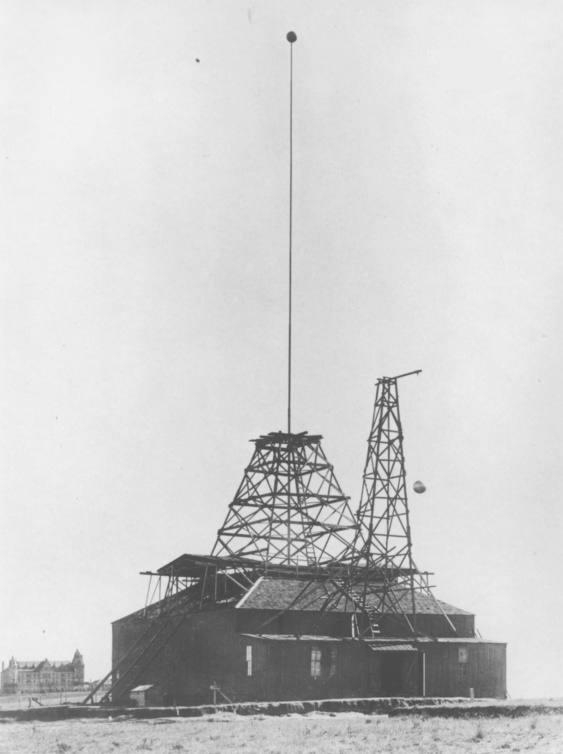
Within this wooden shell, the architectural choices reflected the inventor’s profound anxieties regarding the behavior of high-voltage currents. To prevent the phenomenon of unintended induction, Tesla decreed that the outer shell minimize the use of standard iron hardware, forcing Dozier to rely on interlocking wood beams and intricate joints. Furthermore, acutely aware that his artificial lightning would generate intense heat and a constant threat of conflagration, Tesla instructed that the wooden roof be engineered to physically roll back. This movable ceiling allowed the ozone and suffocating heat to escape into the thin mountain air, preventing the raw lumber from igniting during those first, ominous trials.
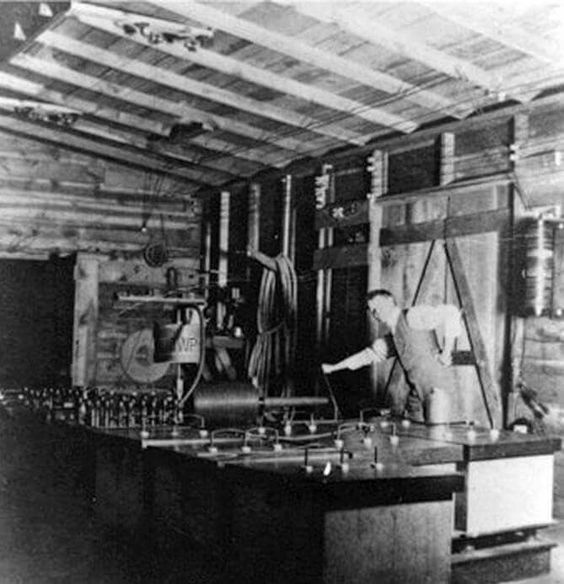
The specialized scientific equipment, upon which the success of the entire enterprise depended, was being manufactured at Tesla’s Houston Street laboratory in New York under the meticulous supervision of George Sheriff, to be subsequently shipped across the continent via rail freight. It was only after these many components had finally arrived, and the barn-like structure on Knob Hill was completed, that Tesla summoned his chief engineer, Fritz Lowenstein, from New York, and they began the interior setup of the Tesla Experimental Station — a labor that involved arranging a complex and formidable array of massive electrical equipment.
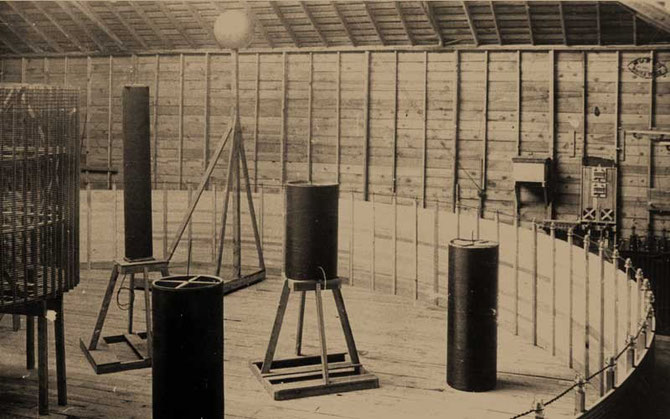
Among these instruments, which seemed to possess a heavy, almost somber industrial presence in the dimly lit interior, were several massive transformers wound with miles of copper wire, a bank of oil-insulated capacitors designed to withstand the immense pressures of the current, and the primary components of what Tesla called his Magnifying Transmitter. This latter apparatus, intended to act as a colossal resonant transformer, was centered around an enormous primary coil that ringed the perimeter of the room, ready to be paired with a delicate, yet towering extra coil positioned at the structure’s very heart.
Looking at the setup, one could not help but feel a profound sense of historical transience, as if these intricate monuments to human ingenuity were destined, like all great works of engineering, to eventually decay into the very dust of the prairie that surrounded them.
07 The Plains
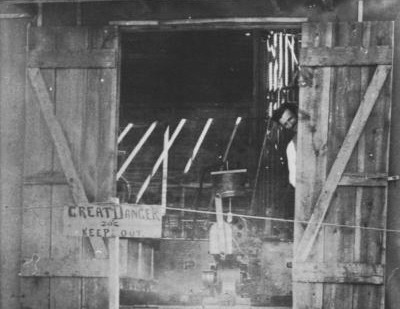
It was during the long, static weeks that followed that Nikola Tesla found himself increasingly occupied with the state of his hands, the skin of which had begun to dry and crack under the influence of the high altitude, a physical deterioration that seemed to mirror the arid landscape stretching out beyond the laboratory walls.
The sharp, repetitive barking of the black-tailed prairie dogs in the surrounding fields, which had struck him as an intolerable distraction upon his first arrival, had by degrees transformed into a welcome, almost necessary chorus, filling the vast silence of the plains.
Standing before a small mirror, he would run his thin fingers through his hair, noting with a quiet, detached alarm that it was growing perceptibly thinner. Colorado, he remarked to himself with the dry irony of an exile, was not a country friendly to hair.
Later that same evening, beneath the dim glow of an incandescent bulb, he opened his oilcloth notebook to record his impressions of the region, impressions that bore the distinct weight of disillusionment. In many respects, he wrote, his pen moving deliberately across the ruled paper, one is disappointed with the aspect of the country itself, despite its far-famed reputation in the popular imagination.
He found the topography singularly uninteresting; even the celebrated mass of Pikes Peak, when viewed from a distance, appeared to him insignificant, a mere hummock on the horizon. Most of the country, he noted, was entirely barren, practically a desert, where vegetable and animal life could barely sustain themselves. The prairie dogs, tunneling blindly beneath the hard earth, were about the only creatures one could discern on these vast, monochromatic plains. One rarely saw a bird against the sky, and he concluded, with a touch of melancholy, that the country must be a tedious one to live in for anyone accustomed to the European traditions of hunting and fishing.
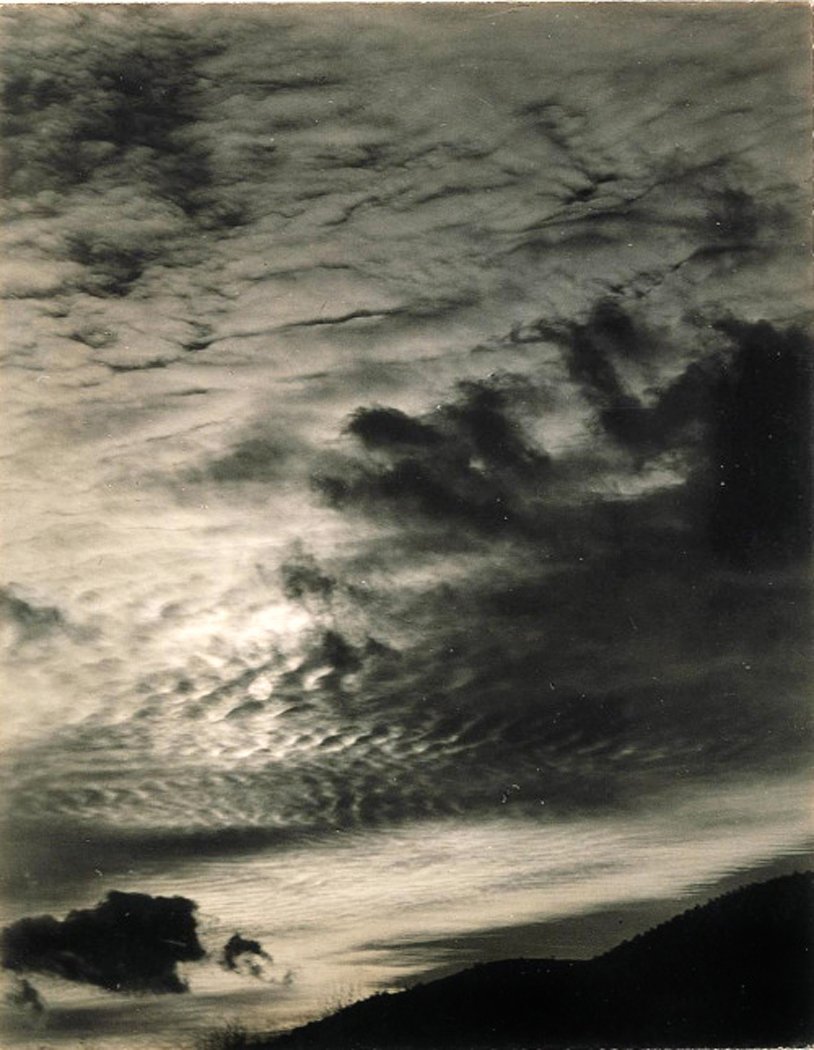
Yet, as though to compensate for a landscape so utterly devoid of interest, the sky above offered an extraordinary counter-measure. As much as the earth was dead, he wrote, so much and far more was the sky beautiful. The sights one witnessed there in the heavens were of such a nature that no pen, however disciplined, could ever adequately describe them.
08 The Local Press
“All the apparatus necessary to successfully conduct his experiments has been received by Nikola Tesla and his experimental station near the Printers’ Home is rapidly taking on an air of activity,” reported The Colorado Springs Evening Telegraph on June 21, 1899. “The rough frame structure is filled with dynamos, electric wires, switches, generators, motors, and almost every conceivable invention known to electricians, and through this mass of intricate and dangerous mechanism Mr. Tesla walks as fearlessly as if on the streets of the city. He knows, perhaps, better than anyone else, just how deadly his appliances are, but he works with them without the least fear, though the least bit of carelessness on his part would result in instant and awful death.
“He has several assistants, all of whom handle the various electrical appliances with great caution, but Mr. Tesla seems to know the exact condition of every wire and every dynamo in the house. He has no fear of grasping a ‘live’ wire, and handles the powerful machines which are to generate the currents of electricity that are to be transmitted to Pikes Peak in the form of intelligible messages, without scarcely a thought as to the great danger.
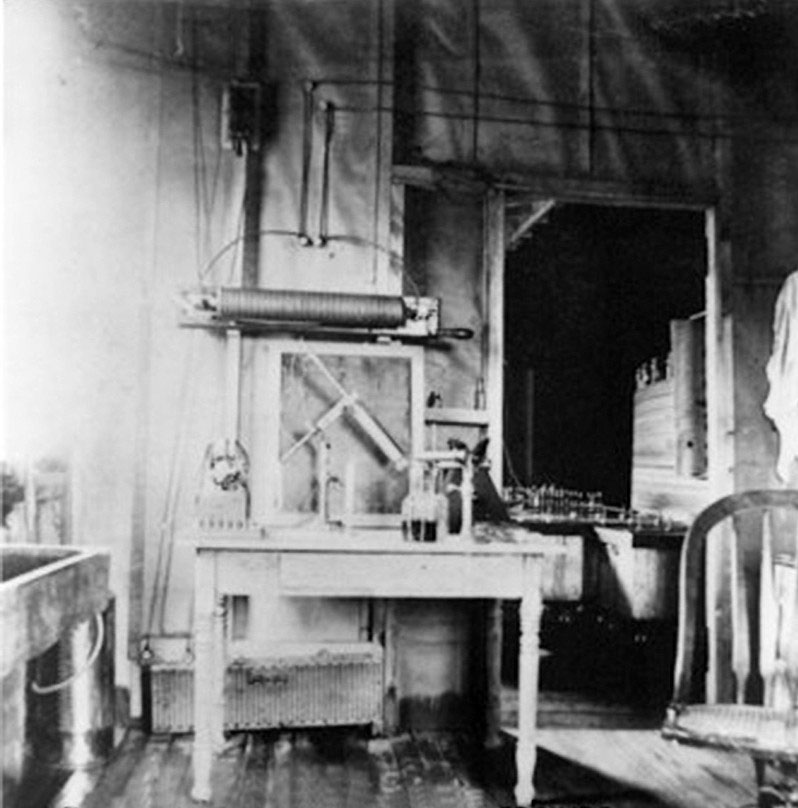
“Mr. Tesla’s experiments have not progressed very far, as yet, and though he is averse to talking for publication, it is known that he has done nothing that would warrant him in asserting that wireless telegraphy, as he conceives it, can be devoted to practical use. Mr. Tesla has two little rooms on each side of the main work-room, which he has fitted up in a plain manner, and in these he plans out the details of his work and his experiments. The main apparatus is, of course, in the center of the big building, and is very complicated. It was put in place by the assistants under the personal direction of Tesla, and while it is in good order, nothing has been accomplished of enough importance to be given to the public.
“Within the next week, however, it is hoped that something tangible will be accomplished, and that Colorado, and Colorado Springs in particular, will again be the center of all eyes in the civilized world, in having been the place where Tesla successfully demonstrated that wireless telegraphy was an assured fact and that electric motive power can be transmitted for a considerable distance without the aid of wires.”
09 The Receiver
In the weeks that followed, Nikola Tesla was scarcely seen at the Alta Vista Hotel; he surrendered himself to a nocturnal loop, spending in excess of twelve hours a day within the humming laboratory. There existed in that space a deep, unexamined melancholy — a repressed tenderness that the inventor, with his absolute refusal of human contact, redirected entirely into the invisible currents of the ether. He paced the floorboards in strict sets of three to ward off the encroaching dread of disease, his physical touch reserved only for the flawless glass of vacuum tubes.
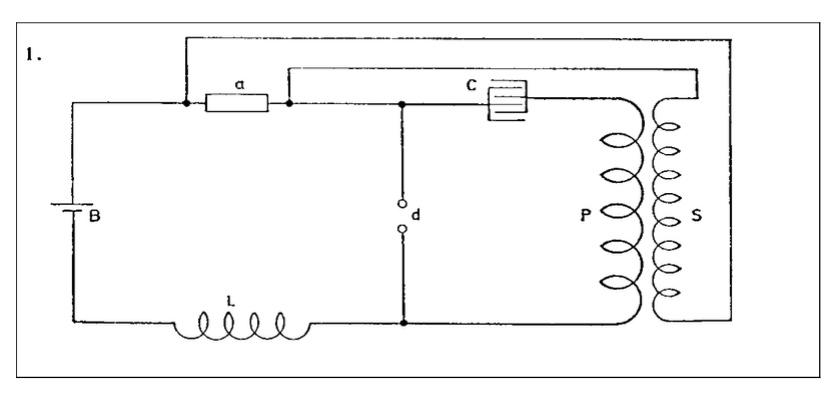
It was in late July, while tracking heavy mountain lightning storms using highly sensitive receiving circuits, that Tesla noticed that the electrical disturbances didn’t just fade away with distance; instead, they created measurable, periodic pulses.
In that luminous instant, he deduced a vertiginous paradox: that our planet, despite its seemingly infinite magnitude, behaves like a conductor of limited dimensions, a finite vessel capable of holding stationary waves that bounce endlessly from one shore of the earth to the other.
He realized he could strike the globe like a solitary, planetary bell, pumping energy directly into the soil so that its echo might be harvested from any corner of the wilderness.
Yet, the bell did not merely ring with its own voice. In the weeks that followed, as he remained bound to the nocturnal loop of the laboratory, he continued to monitor the sensitive automated receivers. The instruments intercepted a series of highly regular, rhythmic pulses that beat in a distinct, mathematical sequence: one… two… three… four…
Seized by a profound and terrifying excitement, Tesla convinced himself that this rhythmic intruder was not a flaw in the machinery, but a sign. Because the signal was orderly, he ruled out the blind interventions of solar flares or atmospheric friction. He surrendered to the cosmic conclusion that he was listening to an interplanetary communication — a wireless greeting sent across the void by intelligent life on Mars or Venus.
For a brief, ecstatic interval, the isolation of Colorado Springs was shattered by this gothic haunting from the cosmic void. The inventor believed he had become the first entity to decode the secret alphabet of the sky, writing with absolute certainty that he had been chosen to hear the greeting of one planet to another. He did not know, or perhaps chose to ignore, that the ether is a mirror that often returns only the arithmetic we bring to it, leaving the traveler to mistake the rhythm of his own clock for the voice of an empire in the stars.
10 The Sanitarium
When Nikola Tesla arrived in Colorado Springs in mid-May of 1899, his thoughts were entirely consumed by the ether, by the transmission of electrical energy through the upper strata of the atmosphere, and subsequently, by the strange, rhythmic impulses he believed were reaching his receivers from the planet Mars. So total was his absorption in these cosmic machinations that he remained, for many months, utterly oblivious to the true nature of the settlement that had grown up around him — a town built not upon the promise of the future, but upon the desperate, collective expiration of the dying.
It was only in August of that year, following a dinner given in his honor at the El Paso Club, that the veil was abruptly torn away. Tesla would later recount how the evening had passed in an uncommonly animated fashion, the entertainment highly enjoyable and the guests appearing to be in the highest spirits and the most excellent health. Yet this pleasant illusion was shattered before parting. A friend, who happened to be a physician of considerable skill, quietly informed Tesla that of the two dozen genteel companions with whom they had just dined, scarcely a single individual possessed more than one whole lung. The majority, the doctor added with grim certainty, were so far gone that should they attempt to leave the rarefied air of the high plateau, they would infallibly perish in a very short time.
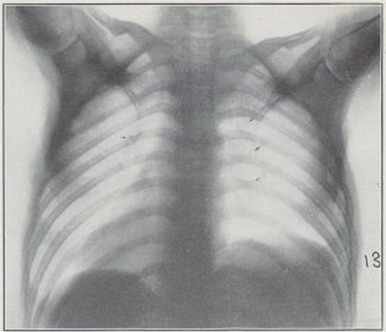
With that sudden, painful astonishment that often overtakes those who live too deeply within their own heads, Tesla began to see the landscape for what it truly was. He realized that he was surrounded by thousands of consumptives, and that the only entirely healthy inhabitants of the place were the coachmen who ferried them to and fro. He concluded, with a touch of cold irony, that while the alpine climate was indeed wonderfully invigorating, only two classes of people should ever venture there: those who already had the consumption, and those who actively wished to contract it.
In truth, the entire territory of Colorado owed its very existence to this invalid class. It was an empire founded upon failing lungs. From the dawn of the sanatoria movement in the 1880s, physicians and patients alike had fled the soot and confinement of the great industrial cities, seeking isolation in high, dry elevations where the air circulated freely and purely. It was a melancholy migration, driven by the terror of a contagion that had only recently been unmasked; for it was in 1882 that Robert Koch first identified the tuberculosis bacillus under his microscope, transforming what had once been romanticized as a hereditary decline into a dreaded, invisible plague.
By the time Tesla was erecting his great experimental tower, science was waging a parallel, silent war against the bacillus. The discovery of X-rays by Wilhelm Röntgen in 1895 had at last allowed doctors to gaze through the flesh and map the shadow of death long before the patient began to cough blood.
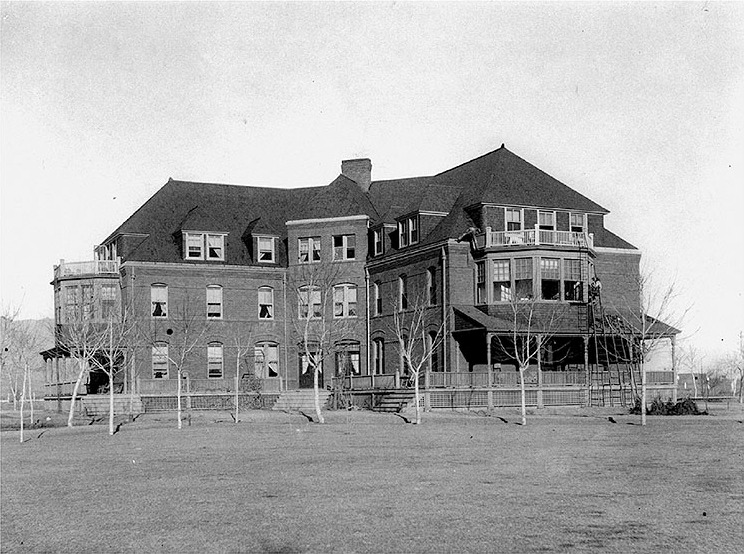
And yet, walking through the quiet streets of Colorado Springs, past the sanatoria where rows of silent figures lay wrapped in blankets on sunlit verandas, one could not help but feel that these two worlds — the world of Tesla’s boundless electrical future and the world of the lingering, Victorian invalid — were passing each other like ghosts in the thin mountain air, each profoundly unaware of the other’s fragile mortality.
11 The Power House
On a night bitter with frost in the final autumn of the nineteenth century, Nikola Tesla stood at the geometric center of the wooden labyrinth on Knob Hill. Around him, the machinery did not merely exist as an assembly of copper and iron; it breathed, a dormant and heavy beast awaiting the word that would map its hidden geography onto the universe.
History — which is always an accumulation of text and errors — records that Tesla turned to his assistant and gave the silent signal to throw the primary switch.
When the switch was thrown, the sky did not merely light up; it fractured. Arcs of violet fire, precisely one hundred and thirty-five feet in length, tore through the roof of the laboratory, searching for an absolute ceiling that did not exist. In Cripple Creek, fifteen miles away, men heard a thunderclap that had no cloud to claim it.
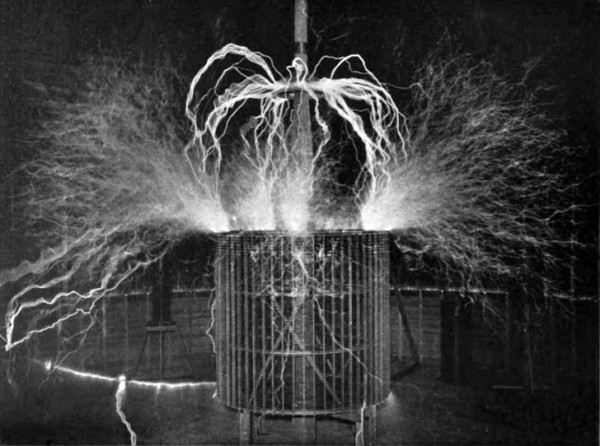
For a brief, suspended epoch, the earth became a conductor of dreams. People walking near the lab reported feeling their hair stand completely on end. If they touched a metallic object — like a fence or a gate — a sharp, stinging spark would jump between their fingers and the metal, even if they were hundreds of feet away from the building. Horses trotting past the laboratory struck sparks from the very dirt beneath their hooves, as if the soil itself were trying to remember the nature of flint. Perhaps the most beautiful illusion of the night belonged to the insects. Butterflies, caught in the invisible web of the transmitter, fluttered through the dark adorned with faint, luminous halos of St. Elmo’s fire, their wings carrying a brief and terrifying divinity.
But every infinite architecture demands its limit. The heavy electrical surge, seeking its origin like a traveler returning to a forgotten home, rushed six miles back down the wire to the El Paso Electric Company. There, in the power house, the primary dynamo caught fire. It was not a cascading failure that darkened the homes of Colorado Springs, but rather a localized sacrifice. The generator burned, the circuit died, and Tesla’s laboratory was instantly plunged into an absolute, suffocating darkness. Historical receipts show that the power company immediately forced Tesla to pay for the linemen and helpers required to rebuild the destroyed circuits. Tesla had momentarily rewritten the laws of nature, but the morning brought a familiar reality.
12 The Three Lamps
Although Nikola Tesla sought to weave messages into the ether, he had become equally obsessed with the dirt beneath our boots. He now saw the planet as a singular, infinite conductor: a sleeping giant whose pulse could be matched by the precise, rhythmic resonance of a copper coil.
To Tesla, a wire was a superfluous boundary, a narrow corridor that constrained the infinite. He imagined a world where the earth and the upper atmosphere formed the dual binding of a single cosmic book, passing currents through the dark as effortlessly as a mind passes memories. In his ledger, the landscape was merely a map waiting to be illuminated from below.
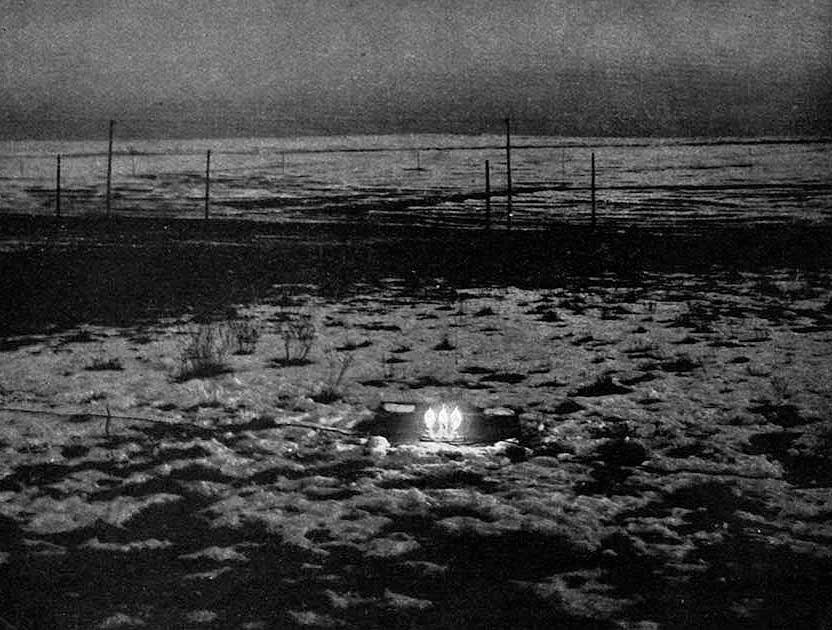
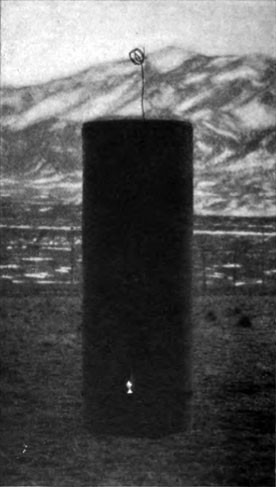
There is a fragment of local lore — perhaps no more real than the kingdoms described by Herodotus — which claims that Tesla once stood in the darkness and commanded two hundred lamps, buried twenty-six miles away, to bloom into simultaneous, subterranean light. The surviving documents, weary of human exaggeration, offer a more modest but no less miraculous reality. They speak of a late autumn evening when a fifty-foot loop of wire, dreaming one hundred feet from its transmitter, compelled three incandescent bulbs to burn with absolute, unattached ferocity against the snow. The image remains: three small suns anchored to the frozen ground, drawing their fire from a hidden, vibrating center.
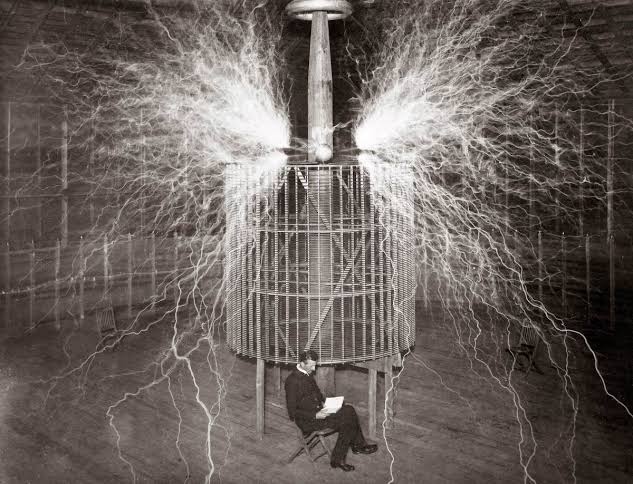
Like all creators of labyrinths, Tesla understood that a miracle unrecorded is a miracle forgotten. He mistrusted the erratic prose of journalists, yet he deeply understood the theological power of the icon. In the twilight of that same year, he summoned a photographer named Dickenson V. Alley to capture an impossible intersection of peace and fury. Through the artifice of a double exposure — a deliberate folding of time — we are left with the eternal image of the inventor. He sits, perfectly composed in a wooden chair, turning the pages of a book, while above and around him a chaotic web of artificial lightning tears the air into ribbons of static. He is the calm geometer at the center of a celestial storm, pretending to read while listening, perhaps, to the silent humming of the world.
13 The New Century
As the clock strikes midnight, ushering in the year 1900, the century turns. Tesla looks up at the stars, feeling no longer isolated, but deeply, mathematically connected to the entire cosmos. A cold, serene clarity settles over him. He prepares to return to New York to build his ultimate world-system, leaving the wooden laboratory near Pikes Peak to rot on the prairie — a monument to a future that arrived too early.
Months later, this Colorado winter will compress into a sprawling, philosophical essay on the problem of increasing human energy, a text read between the lines by J. Pierpont Morgan, who sees a grid of towers where Tesla saw a map of infinite natural forces. But tonight, on the edge of the new era, Tesla merely contemplates the quiet triumph of having touched the future, leaving behind a laboratory that will soon become nothing more than a ghost in the geography of the mind.
Credits
Chapter 1: American Progress, 1872, by John Gast.
Chapter 7: Equivalents, Alfred Stieglitz
Several images are courtesy of Colorado College’s Century Chest and Tutt Library Special Collections:
Chapter 2: Pikes Peak and North Cascade Avenue;
Chapter 5: El Paso Club;
Chapter 10: Sanitarium.